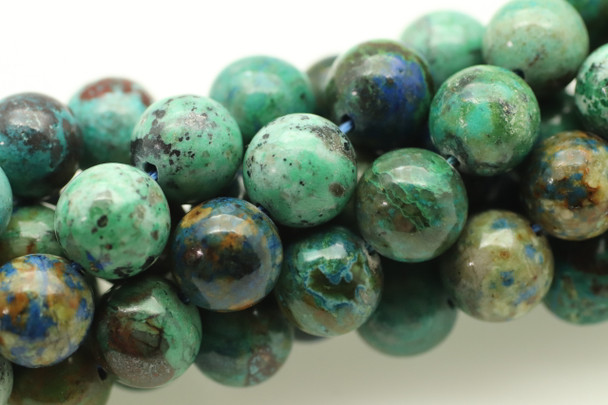




Description
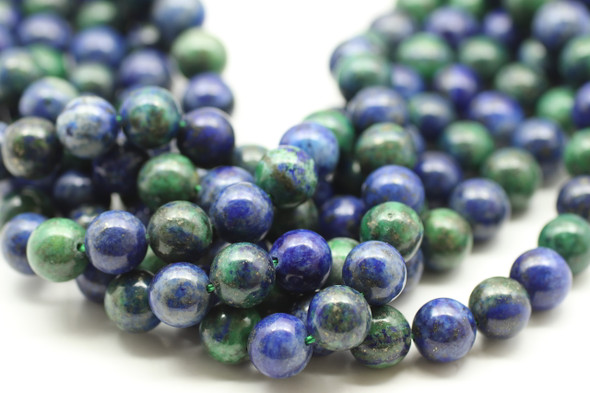
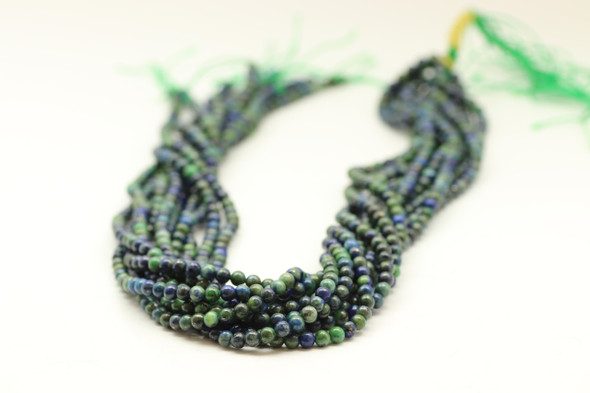
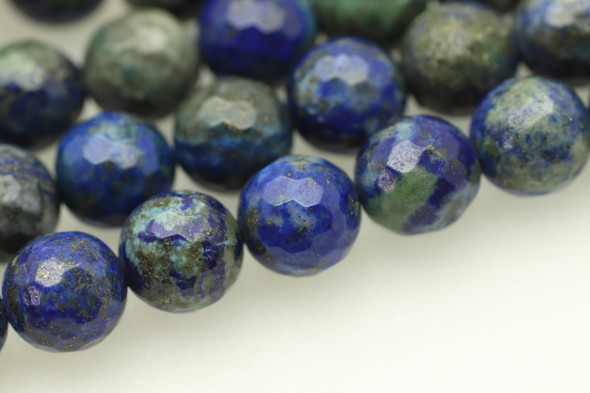
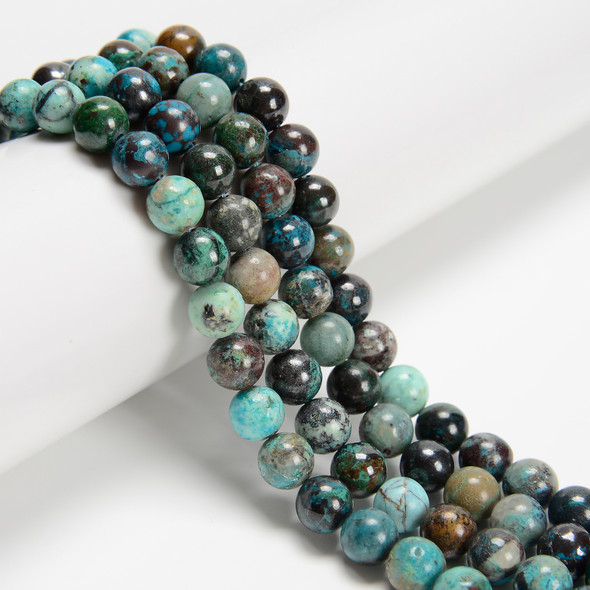
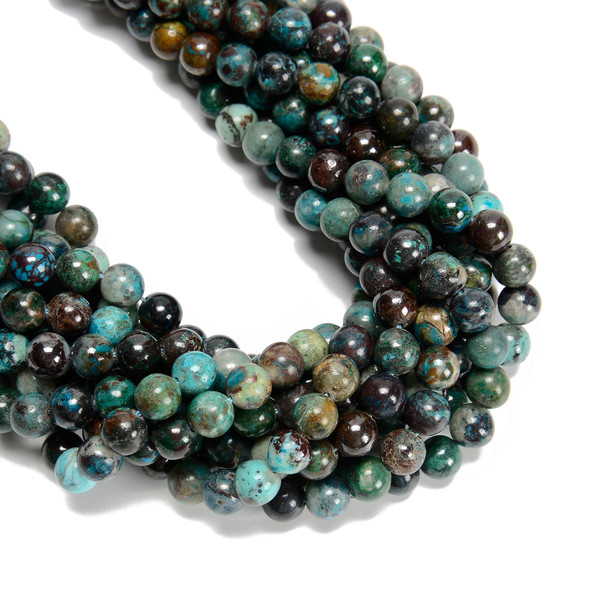
Chrysocolla & Azurite, Chinese, Smooth Round
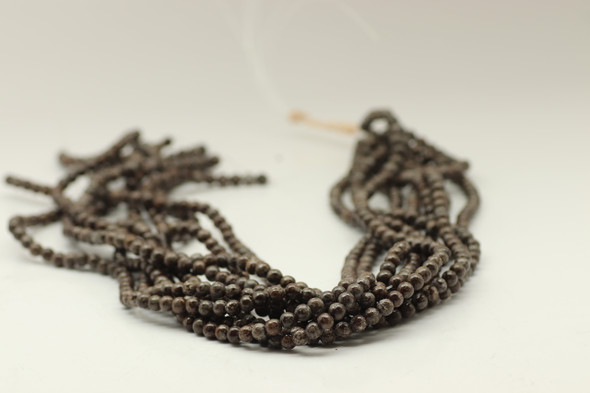
This price is for one bead strand 15 to 16 inches long
6mm strands have 60 to 65 pieces
8mm strands have 43 to 48 pieces
10mm strands have 33 to 38 pieces
When chrysocolla and azurite find each other, you get one of the most breathtaking duos in the entire mineral kingdom. Both of these minerals are copper-based and form in the "oxidation zone" of copper deposits. This is the shallow, oxygen-rich layer where groundwater interacts with copper ores. As water chemistry changes in the copper deposit over thousands of years, the minerals grow over, around, and inside one another. Azurite will often grow as sparkling, deep-blue crystal clusters directly on top of a smooth, sky-blue chrysocolla base.
There is a catch when collecting azurite-chrysocolla: it is geologically unstable. Over long periods, exposure to moisture and air causes azurite to lose carbon dioxide and absorb water. When this happens, the deep indigo azurite chemically transforms, or pseudomorphs, into malachite. Because of this, many chrysocolla-azurite specimens actually represent a "triple threat" that contains all three minerals in various stages of transition.
Hardness 6-7
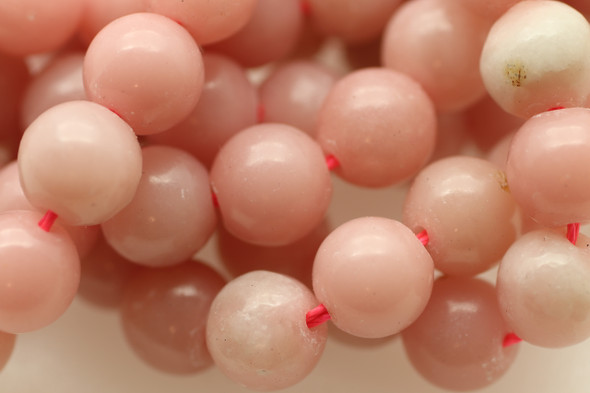
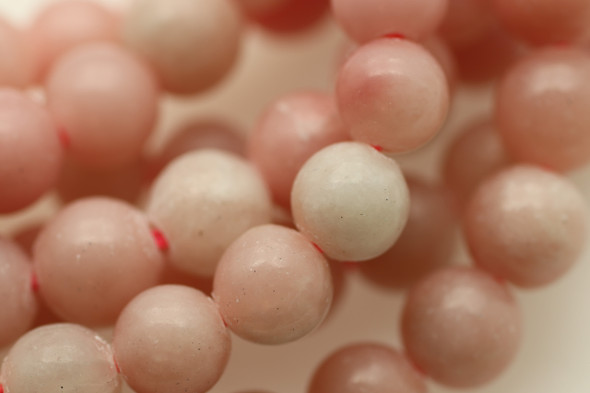
These beads are dyed with the introduction of coloring agent into a gemstone to give it new color, intensify present color or improve color uniformity
The source of these beads is China and they are cut, drilled and polished in China