

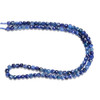
Description
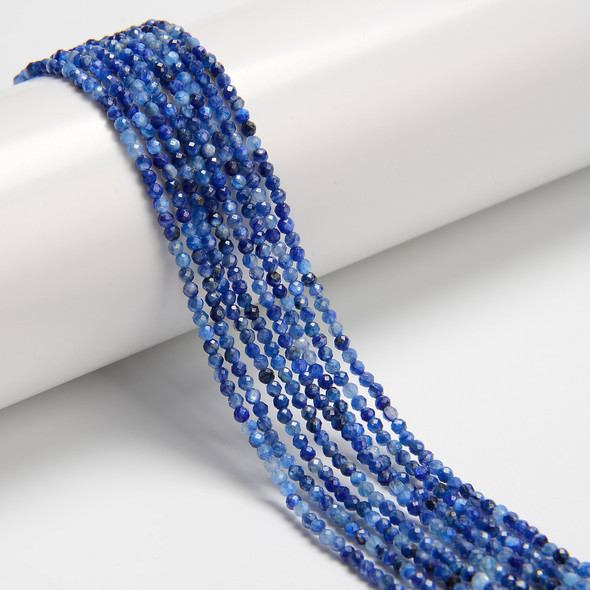
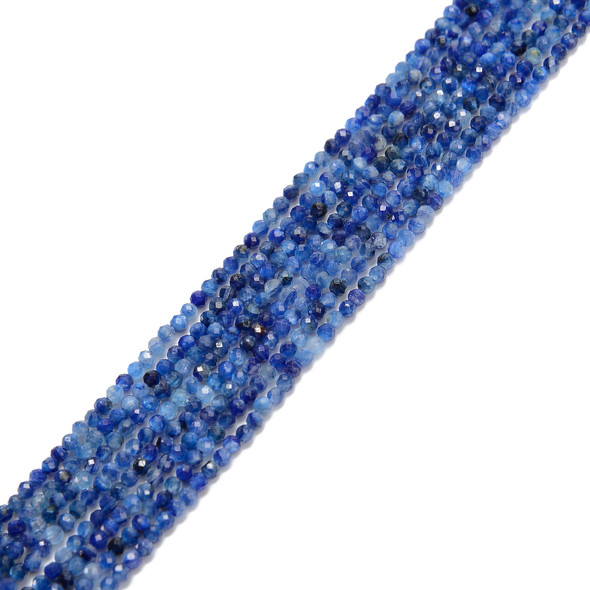
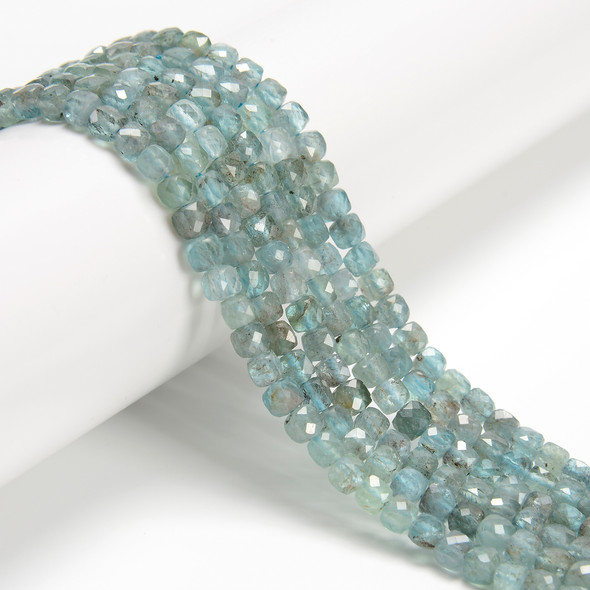
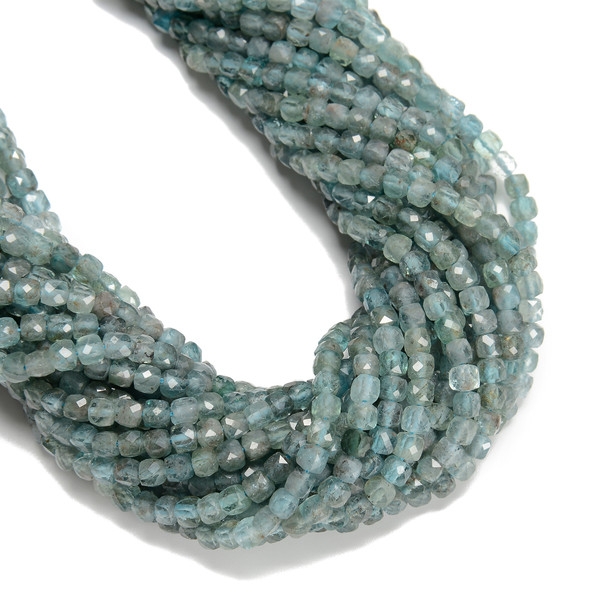
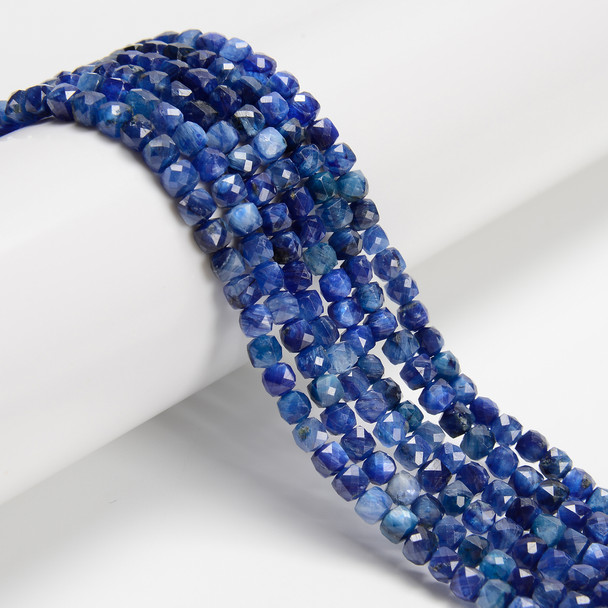
Kyanite, Stabilized, Faceted Cube, 4mm
This price is for one strand 15 to 16 inches long
4mm cube strands have 102 to 107 pieces
Kyanite is an aluminum silicate mineral. It forms deep inside the Earth's crust under intense regional metamorphism, where sedimentary rocks rich in clay are subjected to crushing pressures and high temperatures.
While "kyanite" comes from the Greek word “kyanos” meaning dark blue, it can also be found in striking shades of green, orange, gray, white, and even black. Orange kyanite, colored by trace amounts of manganese, is incredibly rare and primarily mined in Tanzania.
Most minerals have a uniform hardness on the Mohs scale, but kyanite is highly anisotropic, meaning its physical properties vary depending on which direction you scratch it. If cut parallel to the blades, it is relatively soft, measuring about 4.5 to 5 on the Mohs hardness scale. You can scratch it with a pocketknife. When cut across the blades, it is much harder, measuring about 6.5 to 7. A pocketknife won't scratch it this way. Because of this dual identity, old-school mineralogists used to call it disthene, which literally translates from Greek to "two strengths."
Kyanite is found in metamorphic rock formations all over the world. Because it requires intense pressure to form, it is typically discovered deep within mountain ranges, ancient continental shields, and metamorphic belts. Major sources of gem-quality kyanite include: Brazil, Tanzania, Kenya, Switzerland & The Himalayas (Nepal & Tibet)
Hardness 4.5 to 7
The source of these beads is Brazil, and they are cut, drilled and polished in China