

Description
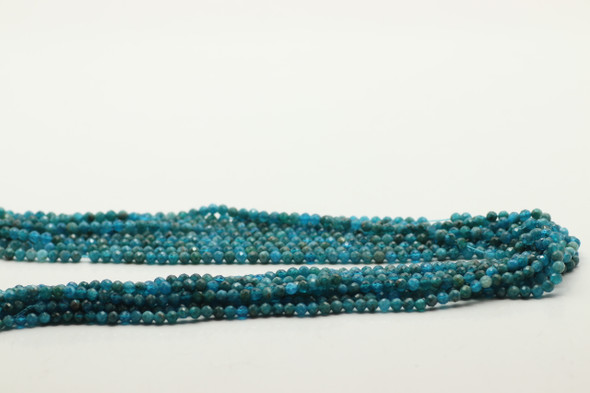
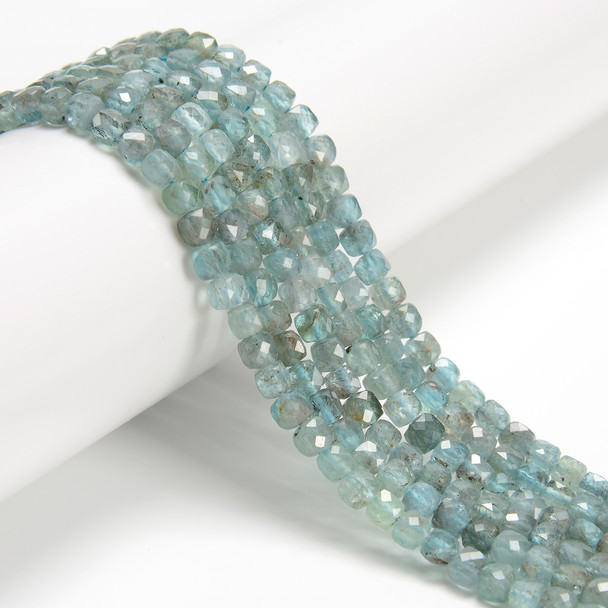
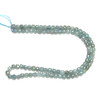
Apatite, Blue, Natural, Faceted Cube, 4mm
This price is for one strand 15 to 16 inches long
4mm faceted cube strands have 102 to 107 pieces
Outside the electric "neon" variants, standard apatite is actually an incredibly diverse group of minerals. In fact, while gem-quality neon apatite is rare, regular apatite is one of the most common phosphate minerals on the planet.
Standard apatite comes in several distinct colors that lack the intense, glowing saturation of the neon varieties including common yellow to golden, blue & green. Rare & unusual colors include purple, violet, pink & reddish-brown.
Some non-neon apatites, especially deep green, blue, or yellow stones from Sri Lanka and Tanzania, possess a optical trait called chatoyancy (the cat's-eye effect). When these stones contain long, parallel microscopic needle inclusions, cutting them into smooth, rounded shapes causes light to reflect in a sharp, bright line right down the center, mimicking the slit of a cat's eye.
Geologists use non-neon apatite crystals for fission-track dating. Because apatite often contains tiny traces of radioactive uranium, scientists can count the microscopic tracks left behind by decaying atoms to determine exactly when a mountain range cooled or when a region experienced massive tectonic movement.
Major sources for gem apatite are Brazil, Myanmar, and Mexico. Other sources include Canada, Czech Republic, Germany, India, Madagascar, Mozambique, Norway, South Africa, Spain, Sri Lanka, and the United States.
Hardness 5
This is a natural stone that has had no treatment other than cutting, drilling, and polishing
The source of these beads is Brazil and they are cut, drilled and polished in China