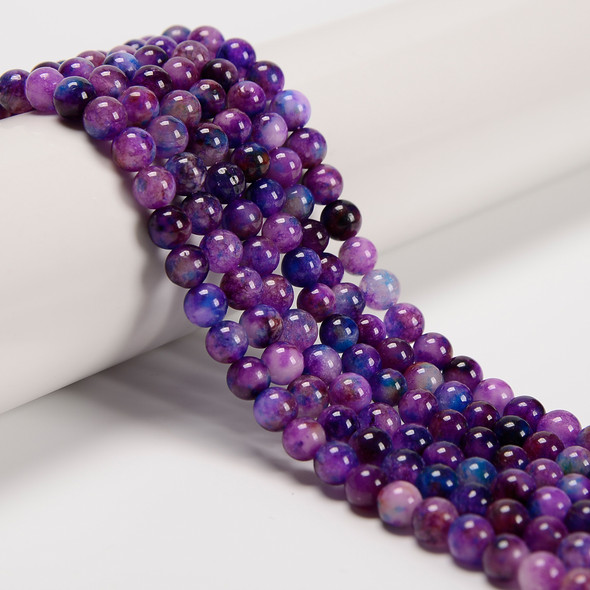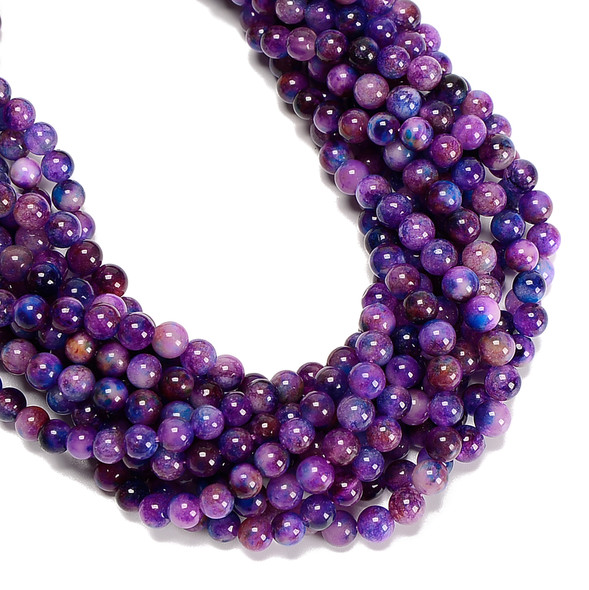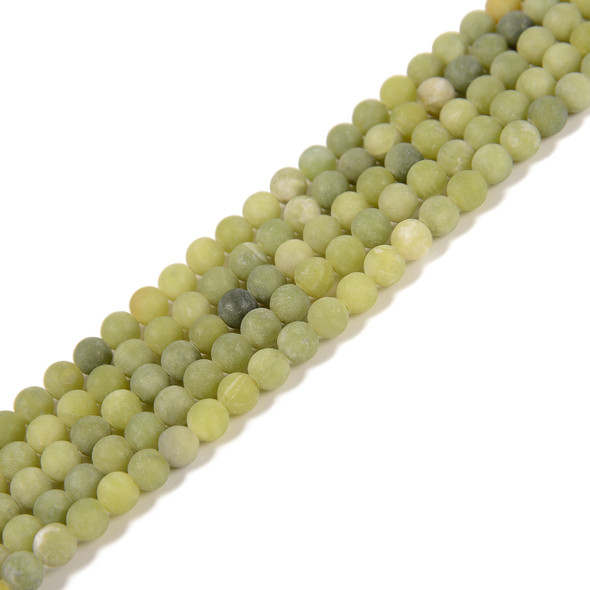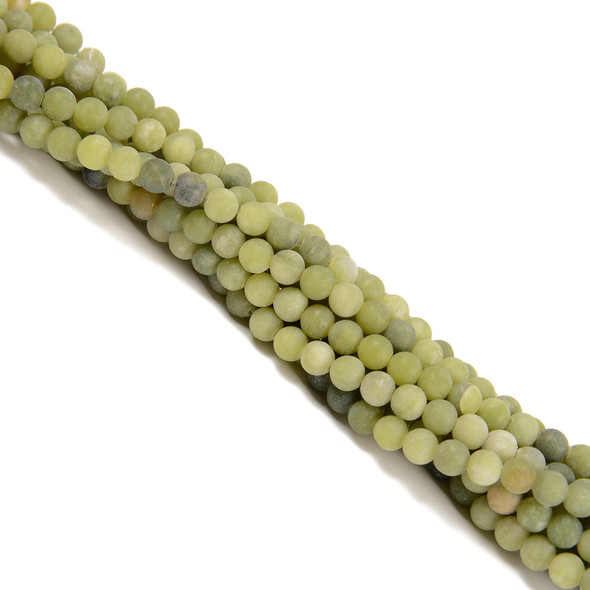


Description
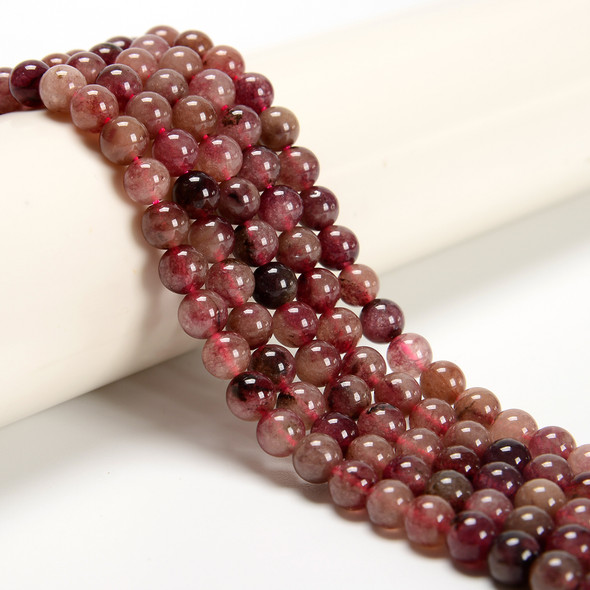
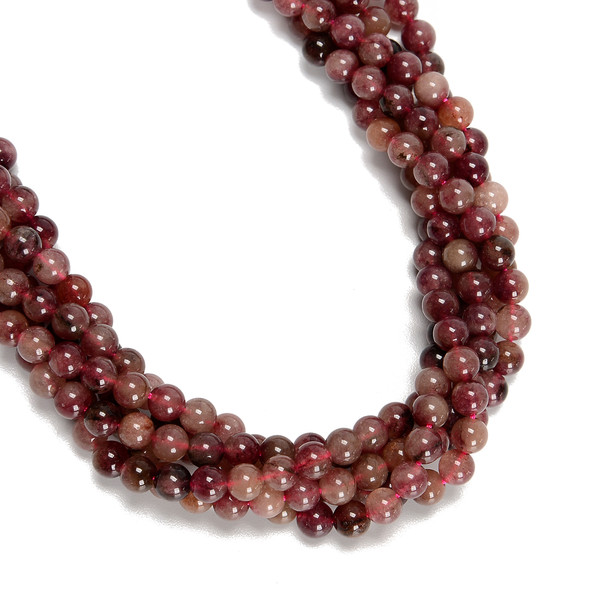
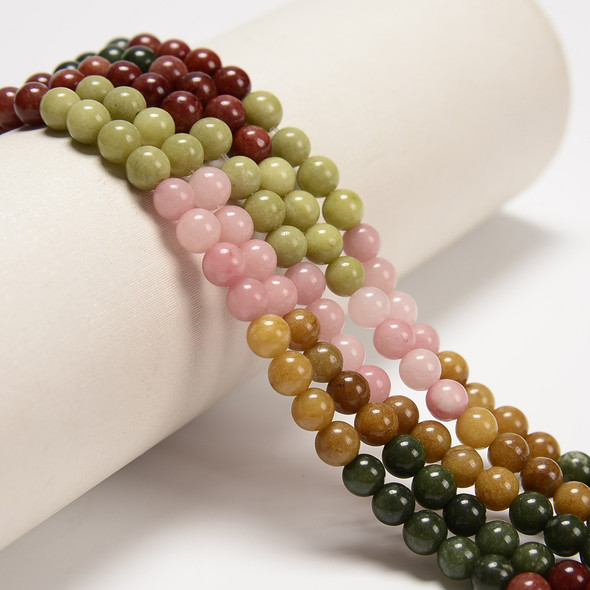
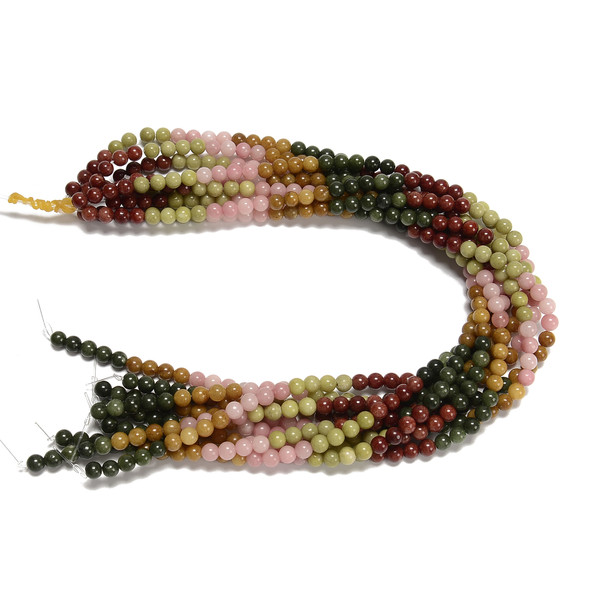
Jade, Hetian, Nephrite, Dyed, Smooth Round
This price is for one strand 15 to 16 inches long
6mm strands have 60 to 65 pieces
8mm strands have 43 to 48 pieces
10mm strands have 33 to 38 pieces
Nephrite jade is one of the two distinct mineral species officially recognized as "jade”, the other being the rarer jadeite. Nephrite is a calcium-magnesium-iron silicate in the tremolite-actinolite mineral series. The most common shade is green, but it also naturally occurs in black, brown, yellow, gray, and a highly prized buttery white known as "mutton-fat jade.”
Traditionally, Hetian jade is mined in the Xinjiang Uyghur Autonomous Region of northwestern China, specifically around the oasis city of Hotan (Hetian) along the majestic Kunlun Mountains. There are two primary ways it is sourced: "Mountain Jade" mined directly from mountain cliffs at dizzying altitudes of 11,000 to 16,000 feet and “Seed Jade" gathered from dry riverbeds like the Yurungkash (White Jade River). These are naturally tumbled river pebbles, highly prized because the water's natural erosion leaves a incredibly smooth, oily texture.
Note on Modern Trade: Today, the term "Hetian Jade" has transitioned from a strict geographical origin to a scientific classification. Nephrite mined in Russia, Canada, and South Korea with the same mineral composition can be legally traded as Hetian jade.
Often called the "Stone of Heaven"
Hardness 7
These beads are dyed with the introduction of coloring agent into a gemstone to give it new color, intensify present color or improve color uniformity
These beads were cut, drilled and polished in China