


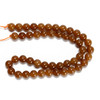

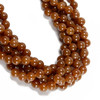
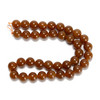
Description
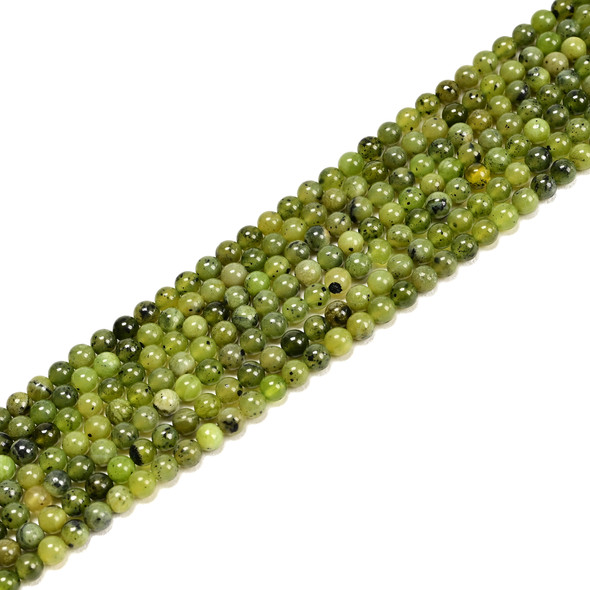
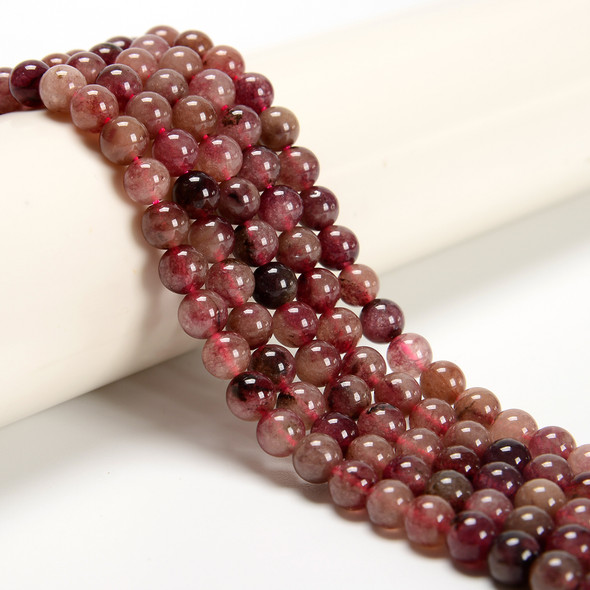
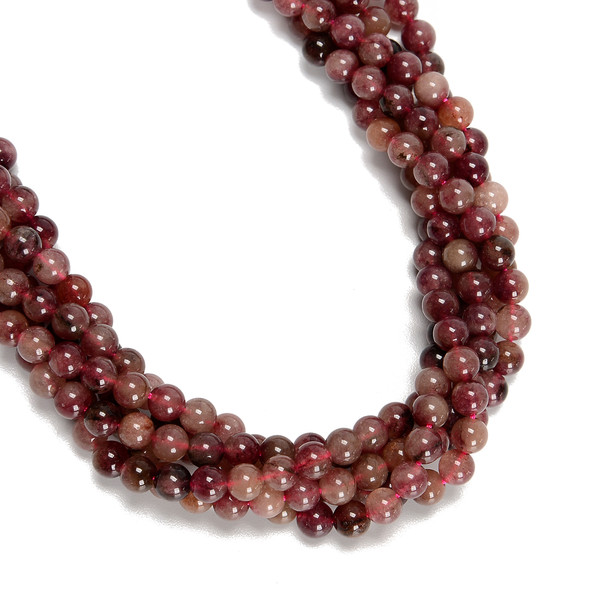
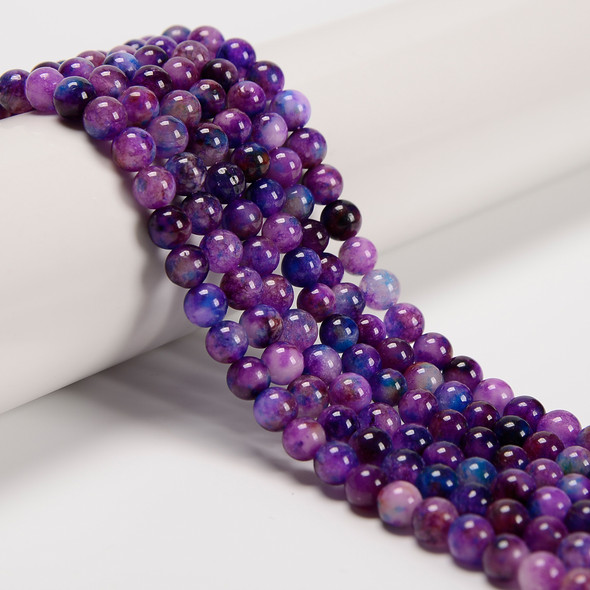
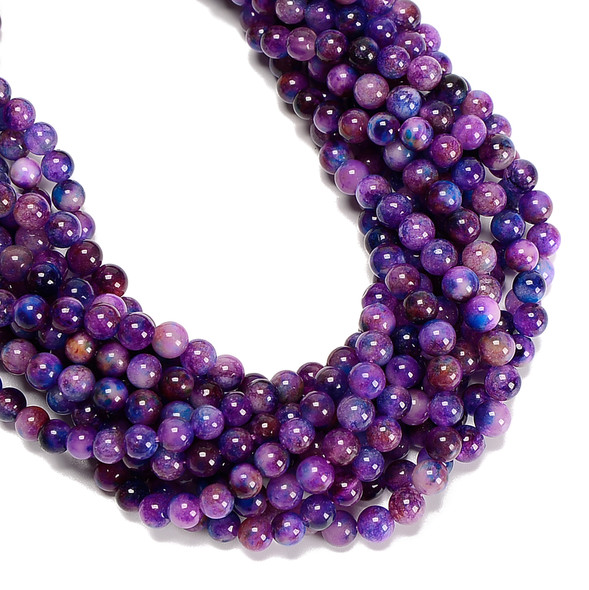
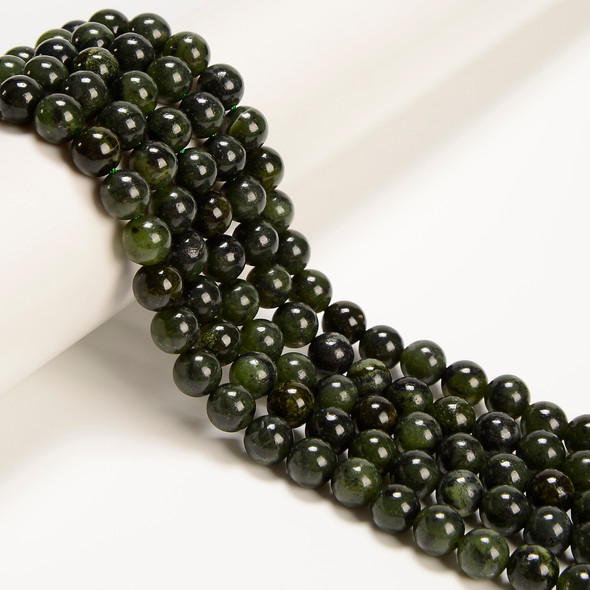
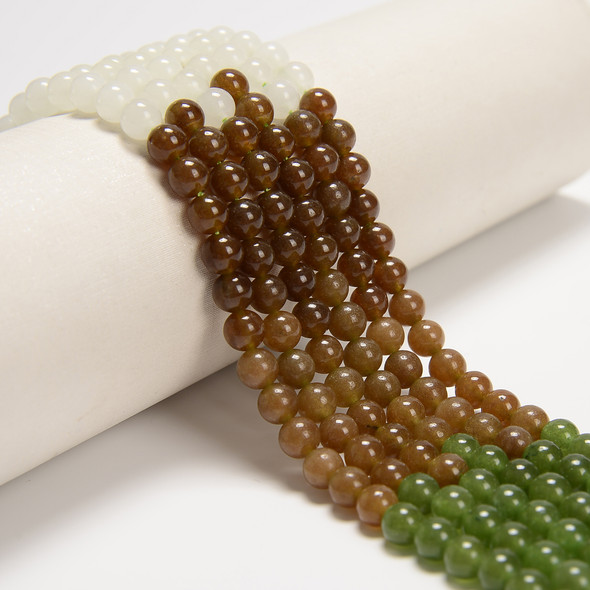
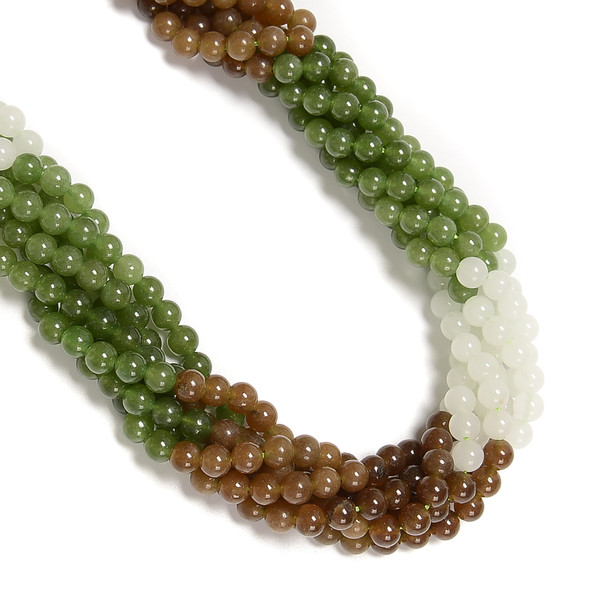
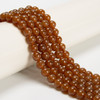
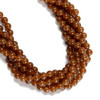
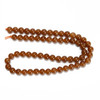
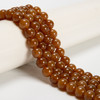
Jade, Brown, Nephrite, Natural, Smooth Round
This price is for one bead strand 15 to 16 inches long
4mm strands have 90 to 95 pieces
6mm strands have 60 to 65 pieces
8mm strands have 43 to 48 pieces
10mm strands have 33 to 38 pieces
Nephrite jade is one of the two distinct mineral species officially recognized as "jade”, the other being the rarer jadeite. Nephrite is a calcium-magnesium-iron silicate in the tremolite-actinolite mineral series. The most common shade is green, but it also naturally occurs in black, brown, yellow, gray, and a highly prized buttery white known as "mutton-fat jade.”
The word “nephrite” comes from the Latin lapis nephriticus, which translates literally to "kidney stone". Ancient Europeans believed that wearing or pressing the cool, smooth green stone against their lower back or flanks could cure or prevent kidney stones and other urinary ailments
Because of its dense, interlocking structure, thin slabs of nephrite ring like bells when struck. In ancient China, jade chimes (bianqing) were crafted from flat, L-shaped pieces of nephrite suspended in wooden frames to produce clear, resonant musical notes during imperial court ceremonies. While modern Western cultures often treat gold as the ultimate standard of wealth, ancient Chinese culture placed jade far above it. As the famous Chinese proverb goes: "Gold has a value; jade is invaluable." It was believed to represent the five virtues of humanity: courage, justice, wisdom, modesty, and compassion.
Unlike jadeite, which is heavily concentrated in Myanmar, nephrite is found in metamorphic rock formations all over the globe. The world's top producers include Canada, New Zealand, Siberia & Western United States, primarily Wyoming, Alaska, and Washington state.
traditional gift to celebrate a 12th & 35th wedding anniversary.
State mineral of Wyoming & Alaska.
Hardness 6.5