



Description
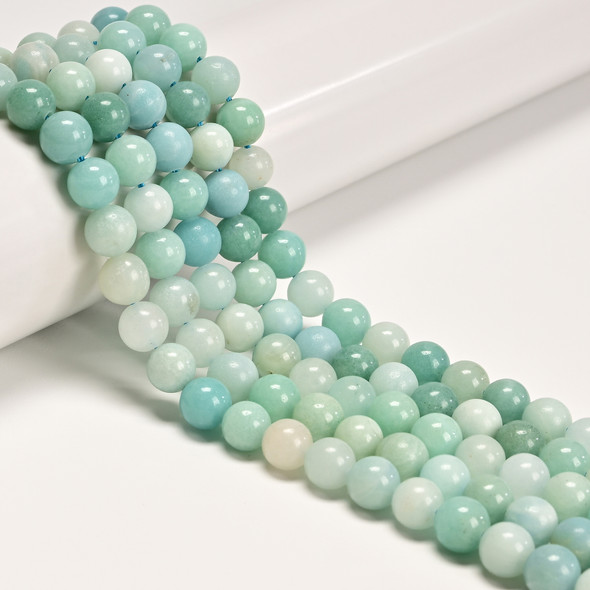
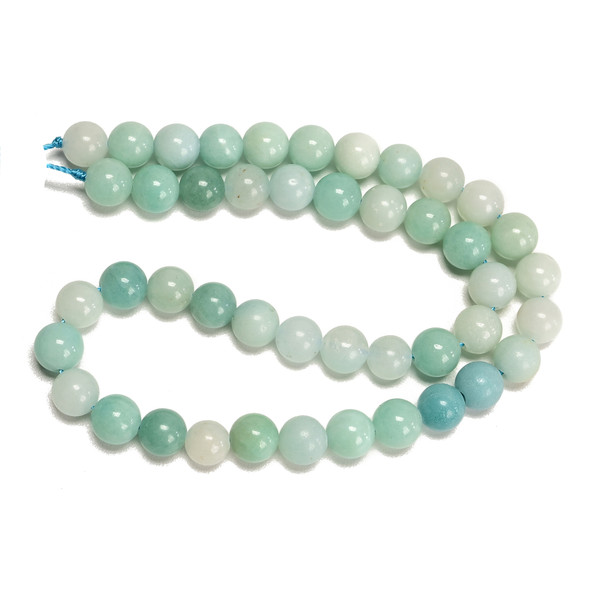
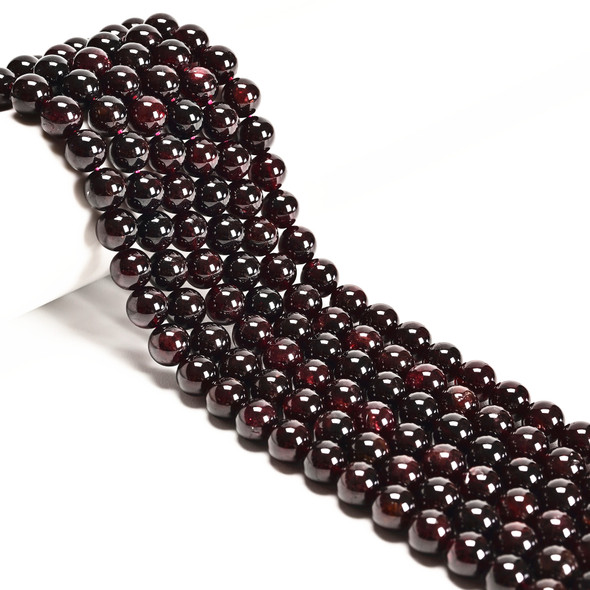
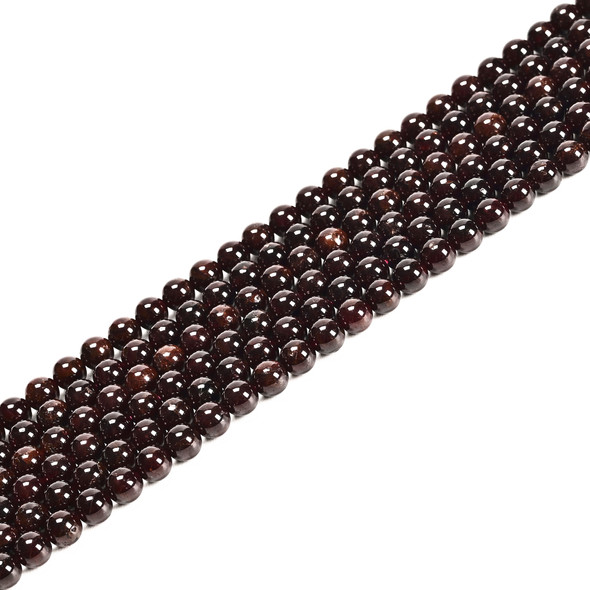
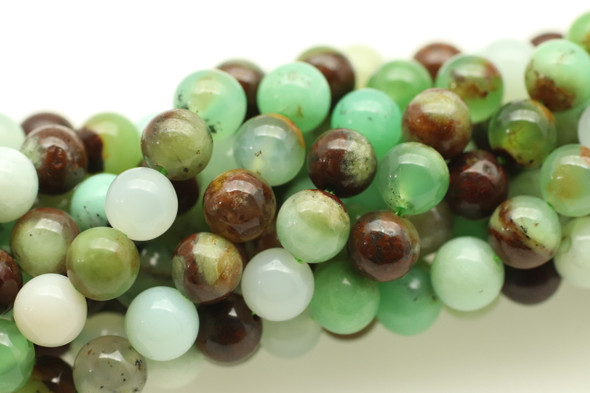
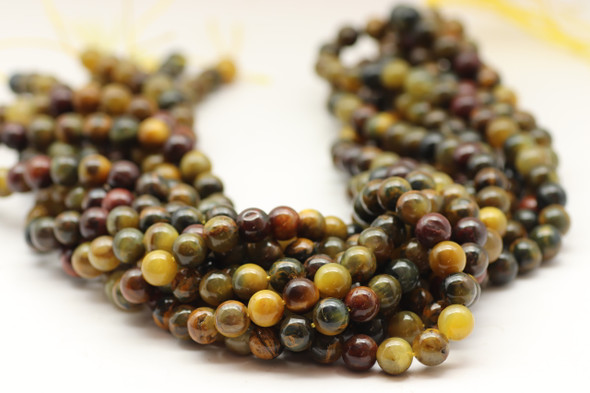
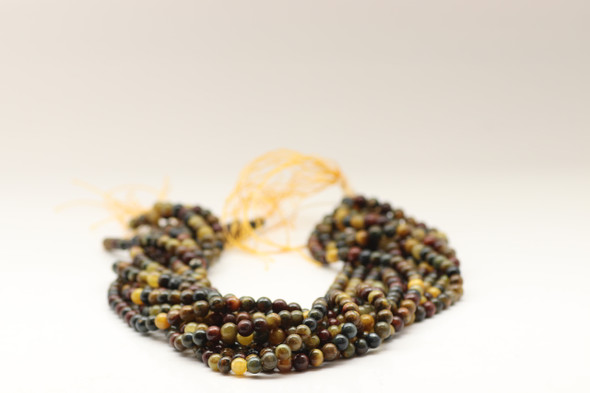
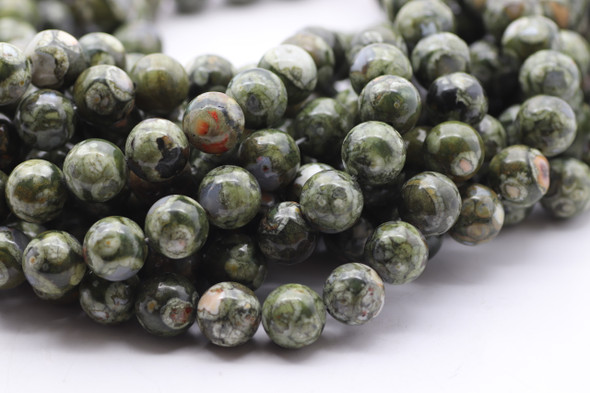
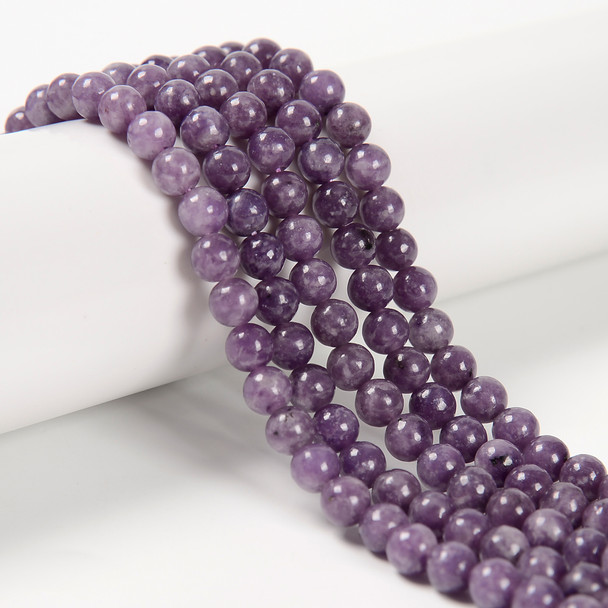
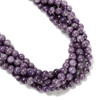
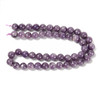
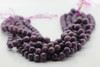
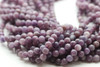
Lepidolite, Natural, Smooth Round
This price is for one strand 15 to 16 inches long
4mm strands have 90 to 95 pieces
6mm strands have 60 to 65 pieces
8mm strands have 43 to 48 pieces
10mm strands have 33 to 38 pieces
Lepidolite is a lithium-rich mica mineral best known for its striking lilac, lavender, and soft purple colors. Like other micas, it naturally forms in thin, flaky sheets or stacked "books" that peel apart easily and shimmer with a soft, pearly luster. Contrary to popular belief, the purple hue comes from trace amounts of manganese, not the lithium itself. When fine flakes of lepidolite are naturally locked inside quartz, it creates a durable, shimmering purple stone often polished into beads.
Lepidolite forms almost exclusively in granite pegmatites; deep igneous rock formations enriched with rare elements like lithium, boron, and fluorine. Because of this, it is commonly found alongside other pegmatite minerals like quartz, albite, spodumene, and colorful tourmalines. Major deposits exist in Brazil, Madagascar, Afghanistan, Portugal, and the United States.
Lepidolite led to the discovery of rubidium. In 1861, chemists Robert Bunsen and Gustav Kirchhoff processed 330 pounds of lepidolite just to extract a few grams of a brand-new element, discovering rubidium for the first time.
When first discovered in the 18th century, it was called “lilalite” after its pale lilac color. Scientists later renamed it lepidolite from the Greek word “lepidos,” meaning "scale," referring to its scaly, flaky appearance.
Hardness 3-4
This is a natural stone that has had no treatment other than cutting, drilling, and polishing
The source of these beads is South Africa and they are cut, drilled and polished in China