

Description
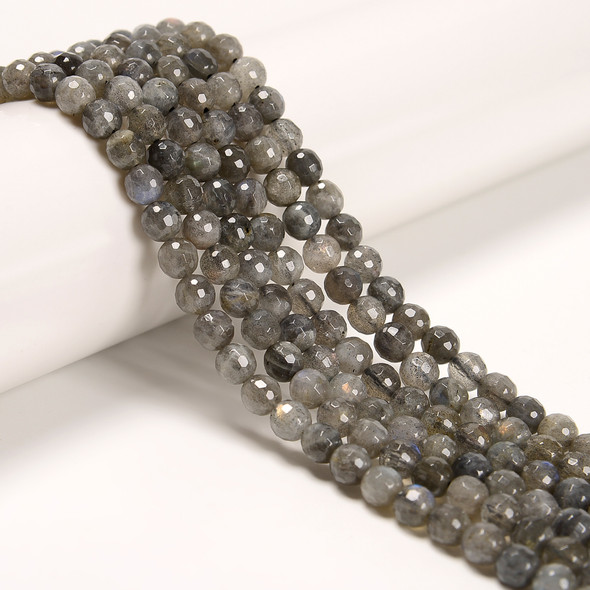
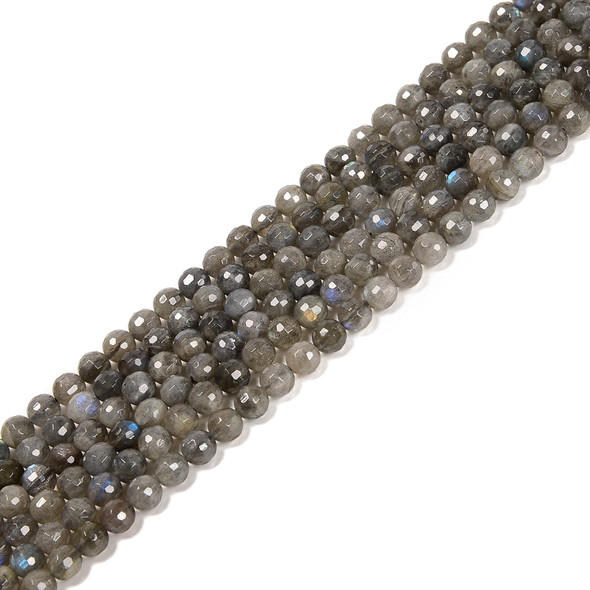
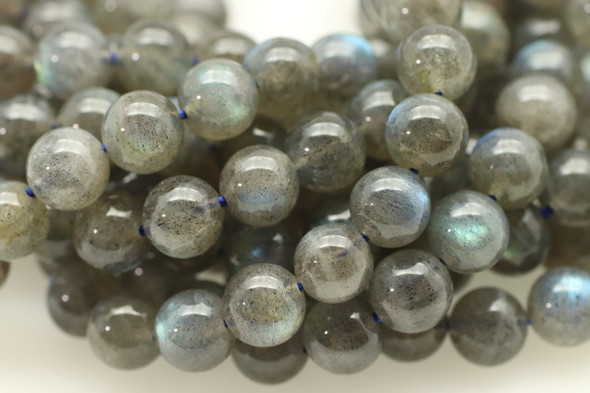
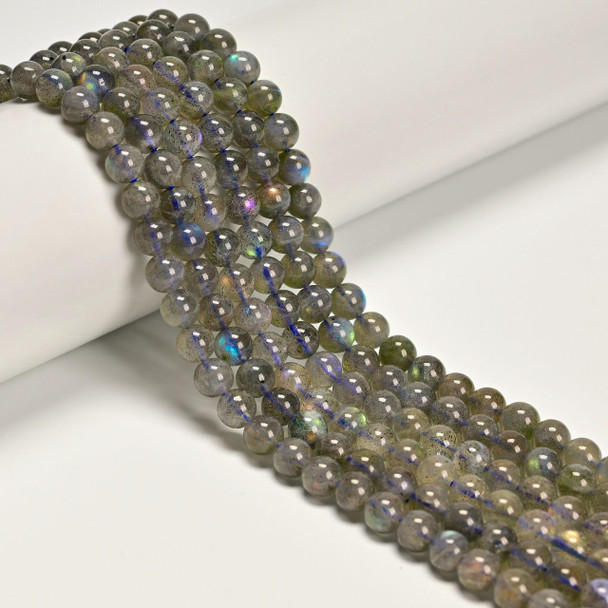
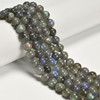
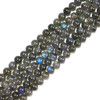
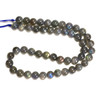
Labradorite, Natural, Smooth Round
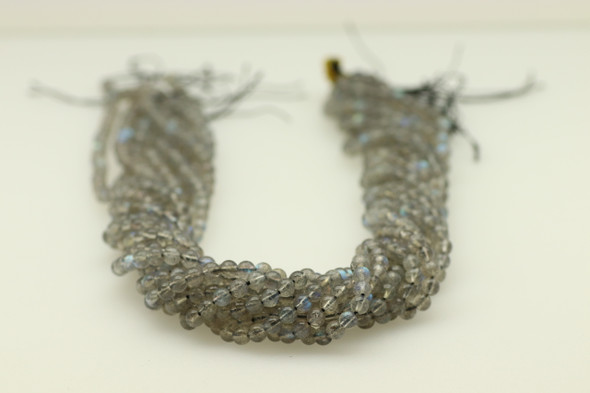
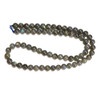
This price is for one strand 15" to 16" long
4mm strands have 90 to 95 pieces
6mm strands have 60 to 65 pieces
8mm strands have 43 to 48 pieces
10mm strands have 33 to 38 pieces
Labradorite is a member of the plagioclase feldspar family. Feldspars are the most common minerals in the Earth's crust. Labradorite was officially discovered by Moravian missionaries on Paul's Island near Nain, Labrador, Canada in 1770, which is where it gets its name.
The stunning, iridescent flash of color you see in labradorite is not caused by pigment or chemical color inside the stone. Instead, it is an optical phenomenon called labradorescence or schiller. As labradorite cools slowly over millions of years, its minerals separate into microscopic, alternating layers of different feldspar compositions. When light hits the stone, it penetrates these micro-layers. The light waves bounce back and interfere with one another, canceling out certain wavelengths and reinforcing others. This reflects back to our eyes as shifting, brilliant colors.
An ancient Inuit legend tells of a warrior who came across the colorful rocks on the coast. Seeing the Northern Lights trapped inside the stone, he struck the rocks with his spear to free the lights so they could return to the sky. He wasn't able to release all of the light, leaving some of the aurora permanently frozen within the labradorite for us to find.
While labradorite is a relatively common feldspar mineral globally, deposit locations that yield the high-quality, brilliantly flashing material used in jewelry, carvings, and luxury countertops are highly specific.
The primary, most famous locations for gem-grade labradorite include Madagascar, Canada & Finland. Beyond the "Big Three," labradorite is mined in smaller or highly specialized quantities in several other regions including United States, Ukraine & Australia.
Hardness 6-6.5
This is a natural stone that has had no treatment other than cutting, drilling, and polishing in China