


Description
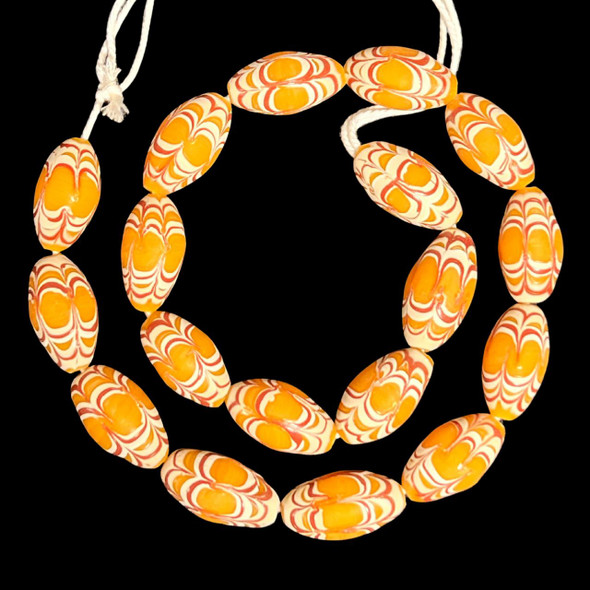
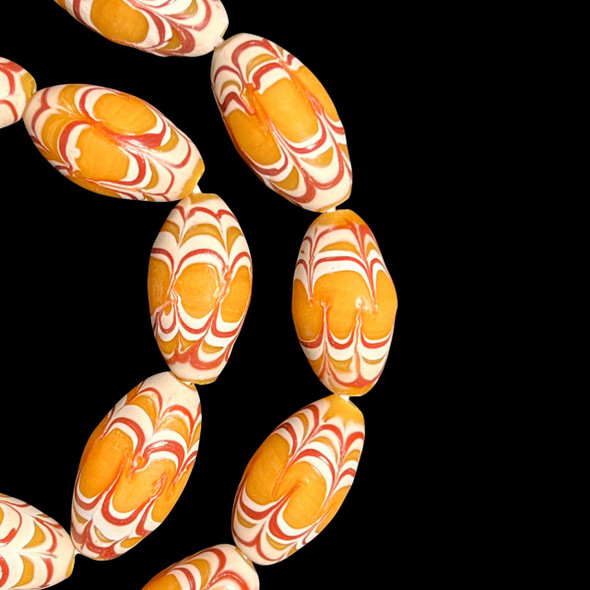
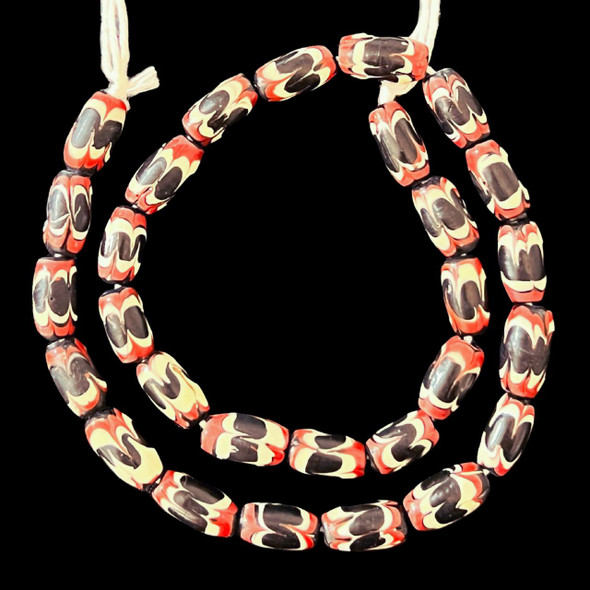
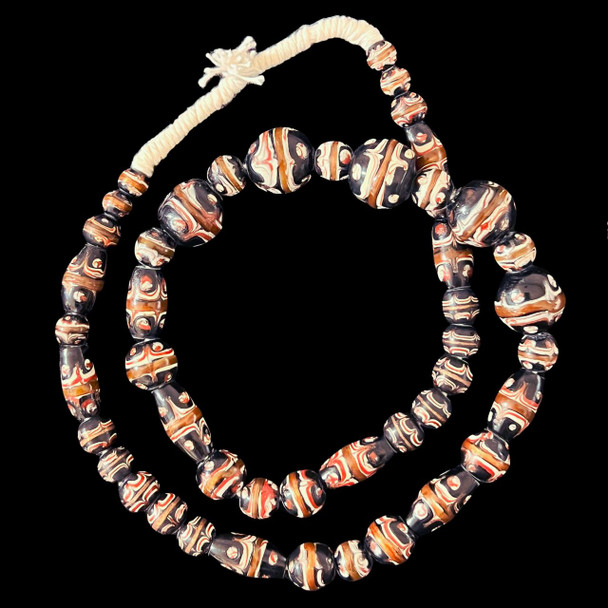
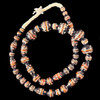
Indonesian Java Glass, Fancy Chevron, Varied Sizes 8mm-24mm, 2-3mm Hole
This price is for one 30 inch strand
8mm-24mm strands have approx. 47 pieces
Indonesian glass trade beads are a fascinating intersection of ancient craftsmanship, colonial history, and modern sustainability. While many people associate "trade beads" solely with Africa or the Americas, Indonesia, specifically the island of Java, has been a global hub for glass bead production and exchange for over a thousand years. During the 17th and 18th centuries, the Dutch East India Company (VOC) used glass beads as a primary currency to trade for spices, tobacco, and gold.
In many Indonesian indigenous cultures, such as the Dayak of Kalimantan or the people of Flores, these beads became more than currency; they were considered heirlooms (pusaka) that signified social rank, spiritual protection, and family wealth.
Contemporary Javanese beads are frequently made from recycled glass: old bottles, jars, and scraps are crushed into powder or melted down. Artisans use lamp-working (shaping glass with a torch) or kiln-firing (melting glass powder in molds). These modern beads often mimic the antique Jatim patterns, featuring vibrant swirls, "eye" motifs, to ward off the evil eye, and organic, matte textures.