

Description
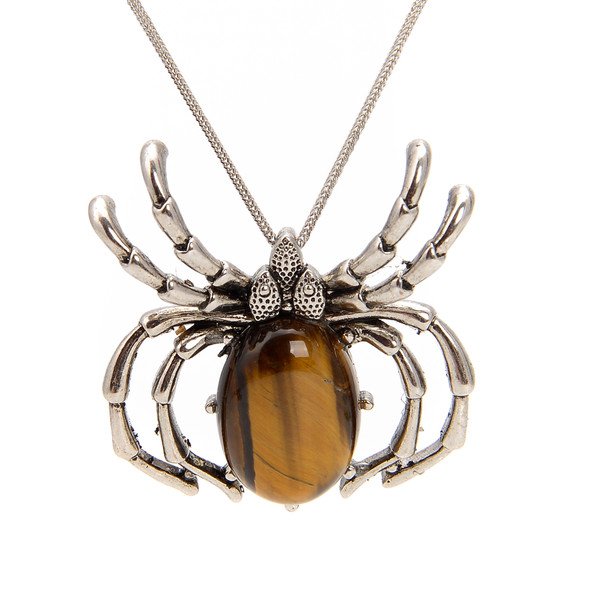
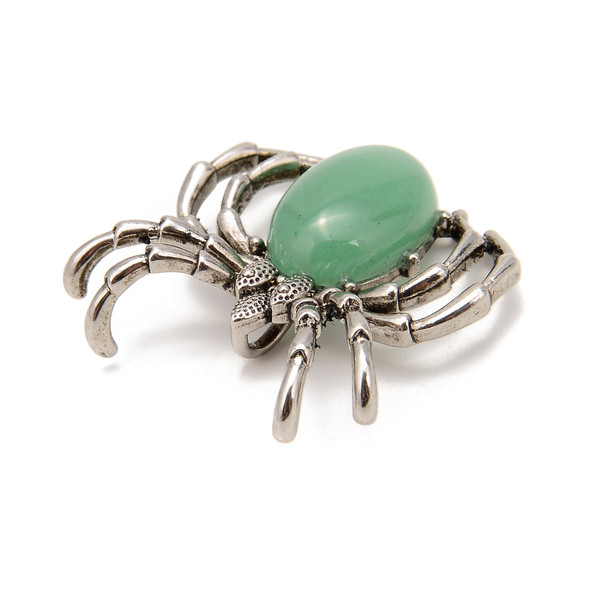
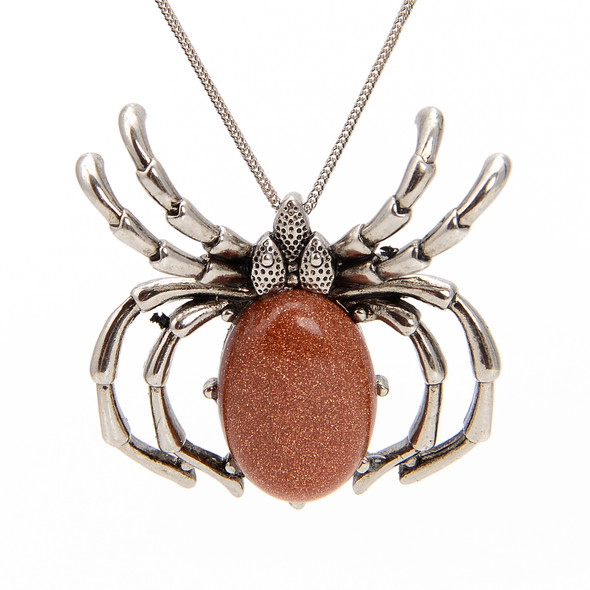
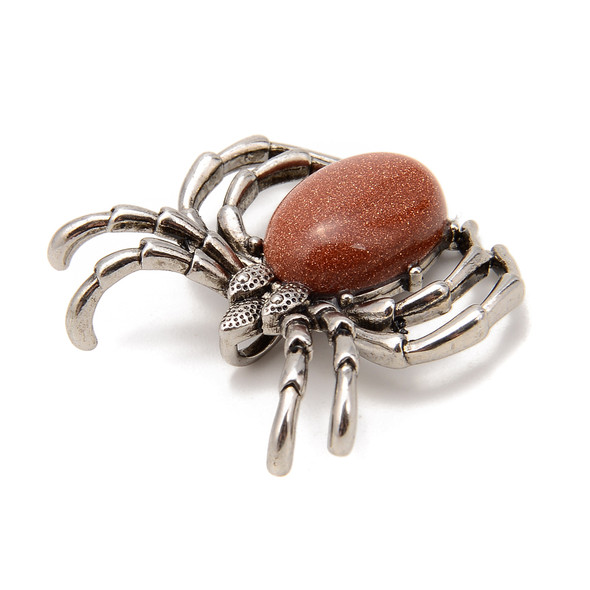
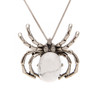
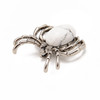
Howlite, Natural, Spider, One Pendant in a Metal Alloy Finding, 35mm
Howlite is a striking, milky-white borate mineral famous for its intricate, dark spiderweb-like veins. With a texture similar to unglazed porcelain, it was first discovered in Windsor, Nova Scotia, Canada, in 1868. Miners in a local gypsum quarry kept hitting these hard, white lumps and complained that they were a major nuisance. They handed them to Canadian chemist and mineralogist Henry How, who realized it was a brand-new, undiscovered mineral.
Raw howlite looks remarkably like a head of cauliflower. It grows in knobby, irregular nodules and very rarely forms visible, individual crystals.
Geologically, howlite forms in evaporite deposits: dry, ancient lake beds where mineral-rich waters evaporate, leaving behind layers of borate minerals. Today, it is commercially mined in Canada, United States, Mexico, Brazil, Germany, Russia, and Turkey.
Hardness 3.5
This is a natural stone that has had no treatment other than cutting, drilling, and polishing in China
Metal Alloy is a metal made by combining two or more metallic elements, base metals, to give greater strength or resistance to corrosion. In mining and economics, base metals refer to industrial non-ferrous metals excluding precious metals, like silver, gold, and platinum. Base Metals include copper, aluminum, nickel, tin, zinc antimony, bismuth, lead and many more. Metal Alloy, also known as Pewter and is usually a tin based alloy 85-95% of the time but could also be zinc based.
In December of 1994, The US Safe Drinking Water Act defined Lead-free as having less than 0.25% lead content. Most newly made solid pewter on the market today is considered lead free by these standards. But it is still recommended to not give children Metal Alloy jewelry if there is any chance, they will put it in their mouths!