

Description
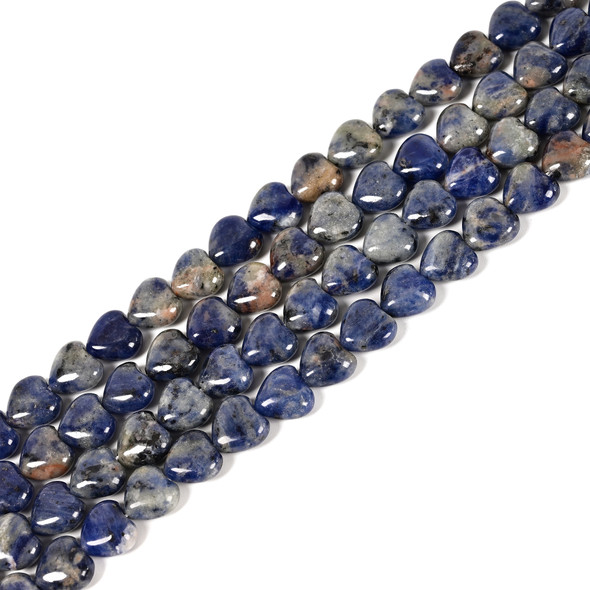
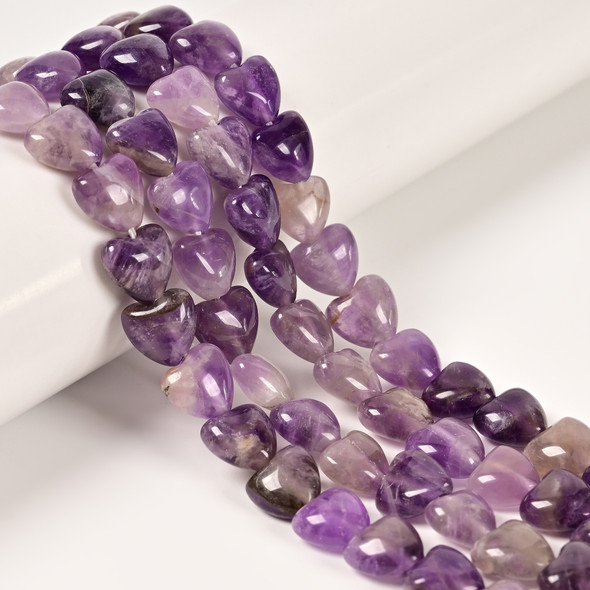
Fluorite, Mixed, Natural, Puffy Heart, 10mm
This price is for one strand 15 to 16 inches
10mm heart strands have about 38 pieces
Fluorite, also called fluorspar, is the mineral form of calcium fluoride. Often called "the most colorful mineral in the world," Fluorite exhibits almost every color of the rainbow, with specific hues typically originating from different trace elements or structural defects including Purple, Violet, Green, Blue & Yellow. Pink, Red & Black are the rarest colors, often formed by unique elemental inclusions or heavy radiation damage. Pure fluorite is completely clear.
The name fluorite comes from the Latin verb fluere, which means "to flow." Because it has a relatively low melting point, metalworkers historically used it as a "flux", a material added to smelting furnaces to help slag flow more easily and separate impurities from metals like iron and aluminum.
If you've ever seen a mineral glow eerie neon under a blacklight, you are witnessing fluorescence. The entire scientific term "fluorescence" was coined in 1852 by physicist George Gabriel Stokes, who named the phenomenon after fluorite because it exhibited such a spectacular glow under ultraviolet light.
In 1965, Illinois officially designated fluorite as its state mineral. During the 19th and 20th centuries, southern Illinois (specifically Hardin and Pope counties) was home to some of the largest and most productive fluorite mining districts in the United States. While Illinois' last major commercial fluorite mine closed in 1995 due to cheaper imports, the state is still legendary among mineralogists for producing some of the finest, most museum-worthy cubic specimens in history.
Hardness 4-4.5
This is a natural stone that has had no treatment other than cutting, drilling, and polishing
The source of these beads is China and they are cut, drilled and polished in China