


Description
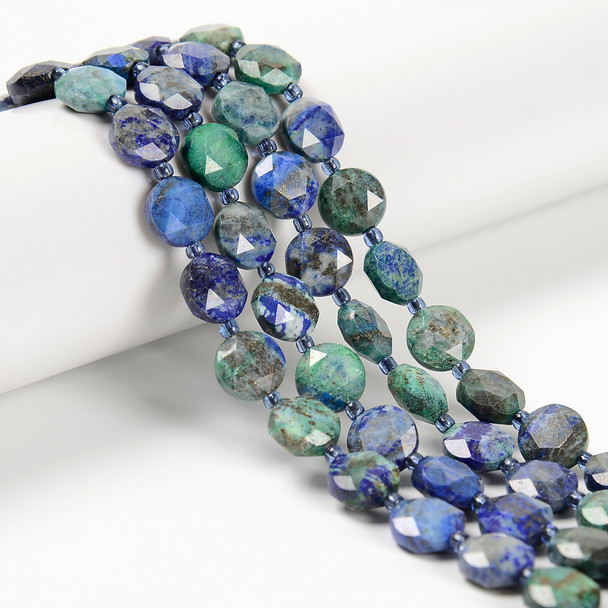
Chrysocolla Chinese, Dyed, Faceted, Hexagon Coin, 10mm
This price is for one strand 15 to 16 inches
Hexagon Coin strands have about 30 pieces
Chrysocolla is a minor ore of copper that features striking, swirling shades of vivid blue and green that look remarkably like a miniature view of the Earth from space. The name comes from the Greek words "chrysos" (gold) and "kolla" (glue). Ancient Greek metallurgists, starting with the philosopher Theophrastus in 315 BC, used it as a primary ingredient to solder gold.
Because it often grows alongside other copper minerals like malachite, azurite, and turquoise, it is a favorite for collectors who love rich, organic colors. Want to know if you've found turquoise or chrysocolla in the wild? Give it a quick lick (or touch a wet finger to it)! Because chrysocolla is highly porous, it absorbs moisture quickly and will actually stick slightly to your tongue or finger. Turquoise will not.
Geologically, chrysocolla is a secondary mineral. This means it isn’t born deep in the Earth as a primary deposit; instead, it forms when acidic, silica-rich groundwater trickles down through copper ore deposits near the surface, weathering and oxidizing them over eons. Because it requires copper to form, wherever there are major copper mines, you are highly likely to find chrysocolla. It is primarily found in arid, dry regions of the world where this specific weathering process thrives.
Hardness 7
These beads are dyed with the introduction of coloring agent into a gemstone to give it new color, intensify present color or improve color uniformity